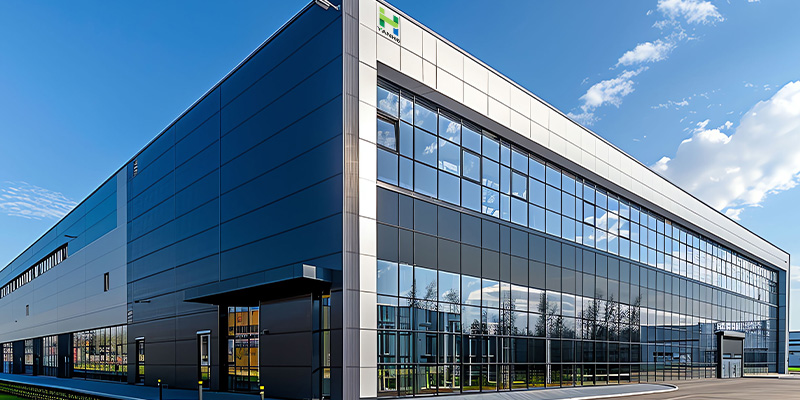
شرکت Anhui Yanhe New Material Co., Ltd. که در سال 2012 تأسیس شد، در زمینی به مساحت 17 هکتار در منطقه توسعه اقتصادی Guangde غرب واقع شده است. این شرکت عمدتاً مواد برچسب زنی تخصصی، نوارهای کاربردی برای صنعت الکترونیک، محصولات چسب برای مواد مختلف فیلم کاربردی را توسعه و تولید می کند و قادر است با اعمال پوشش های سطحی مربوطه بر اساس نیازهای عملکردی سطوح مختلف مشتریان، نیازهای فنی محصولات مشتریان خود را به طور کامل برآورده کند.
نمد فایبرگلاس فویل آلومینیومی: خواص، مشخصات و کاربردهای صنعتی
What Aluminum Foil Fiberglass Felt Is — and What Makes It Different
Aluminum foil fiberglass felt is a laminated composite material built from two distinct layers working in concert: a dense, needle-punched fiberglass felt core bonded to a thin aluminum foil facing on one or both sides. The fiberglass core — made from fine-diameter E-glass fibers — handles thermal resistance and sound absorption. The aluminum foil layer adds a radiant heat barrier, moisture protection, and mechanical surface durability that bare fiberglass cannot provide on its own.
The distinction between single-faced and double-faced configurations matters more than most buyers initially expect. Single-faced material (aluminum foil on one side only) is the standard choice for pipe wrapping, duct lining, and applications where one surface is exposed and the other is bonded to a substrate. The foil faces outward to reflect radiant heat and resist surface moisture. Double-faced material (aluminum foil on both sides) is specified when the insulation sits in an exposed cavity, between two heat sources, or in environments where moisture can enter from either face — as is common in automotive engine compartments and certain industrial enclosures.
Compared to standard fiberglass insulation batts, aluminum foil fiberglass felt is stiffer, more dimensionally stable, and far more moisture-resistant straight out of the roll. It does not require a separate vapor barrier membrane — the laminated foil surface handles that function directly. برای تیم های تدارکاتی که در حال ارزیابی هستند noise reduction buffer materials for electronics and industrial use , this integrated construction means fewer components to specify, stock, and install.
Four Performance Advantages That Drive Industrial Adoption
Aluminum foil fiberglass felt has displaced simpler insulation materials across multiple industries over the past two decades. The reasons come down to four measurable performance characteristics that competing materials rarely combine in a single product.
عایق حرارتی. The fiberglass core delivers low thermal conductivity — typically 0.030–0.045 W/(m·K) depending on density and thickness — while the aluminum foil surface reflects up to 95% of incident radiant heat rather than absorbing it. This dual mechanism means the material resists heat transfer through both conduction and radiation simultaneously. In practical terms, a 25mm aluminum foil fiberglass felt wrap on a chilled water pipe can reduce surface condensation and heat gain far more effectively than the same thickness of rubber foam, which handles conduction but contributes nothing to radiant reflection.
Sound absorption. The needle-punched fiberglass structure is inherently porous, which allows it to dissipate mechanical vibration and airborne noise through internal friction. Sound absorption coefficients at mid-frequencies (500–2000 Hz) typically range from 0.70 to 0.90, making the material effective against the turbulent airflow noise in HVAC ducts and the mechanical vibration transmitted through automotive exhaust systems. Standard rubber foam — often the alternative in these applications — achieves coefficients closer to 0.40–0.55 in the same frequency range.
مقاومت در برابر رطوبت و بخار. Bare fiberglass absorbs moisture, which collapses its fiber structure and degrades both thermal and acoustic performance over time. The laminated aluminum foil face acts as a true vapor barrier, preventing water vapor penetration from the exposed surface. In high-humidity environments — marine engine rooms, food processing facilities, underground mechanical spaces — this protection determines whether the insulation maintains its rated performance after 12 months of service or not.
مقاومت در برابر آتش و دما. فایبرگلاس ذاتاً غیر قابل احتراق است. it does not burn, melt, or contribute fuel load in a fire event. Combined with aluminum foil (which also will not ignite), the composite achieves Class A fire ratings under standard classifications. Continuous operating temperatures of 300–550°C are achievable depending on fiber grade, with specialty high-silica variants rated beyond 700°C — performance ranges that organic foam insulations cannot approach.
مشخصاتی که هنگام منبع یابی اهمیت دارد
Aluminum foil fiberglass felt is not a single-grade material. تراکم, thickness, foil weight, and maximum service temperature vary across product lines, and selecting the wrong combination for a given application results in either over-engineering (cost penalty) or underperformance (field failure). The table below maps the key specification variables against their practical implications:
Double-faced for cavity installation or bilateral moisture exposure
Roll dimensions
Width: 0.5–2.0 m; Length: 10–50 m
Material utilization efficiency, handling on-site
Custom widths reduce cutting waste for high-volume production lines
One specification point that frequently causes downstream quality issues is foil adhesion strength. The aluminum foil must remain bonded to the fiberglass core under thermal cycling, mechanical flexing, and in some cases solvent exposure during installation. Request peel adhesion data (typically expressed in N/25mm) and confirm that the bonding method — heat lamination versus adhesive lamination — is appropriate for the operating temperature range of your application.
Industry Applications: From HVAC Ducts to EV Battery Packs
Few insulation materials appear across as wide a range of end markets as aluminum foil fiberglass felt. Its combination of thermal, acoustic, fire, and moisture performance makes it relevant wherever two or more of those properties are simultaneously required — which covers a surprisingly broad industrial landscape.
HVAC ductwork and piping. This is the material's largest single application by volume. Aluminum foil fiberglass felt is used as duct liner (bonded to the interior of metal ducts to reduce turbulence noise and heat loss), duct wrap (applied externally to pre-fabricated duct sections), and pipe insulation (rolled around chilled water, hot water, and refrigerant lines). The foil face provides the vapor barrier that prevents condensation on chilled piping — a failure mode that causes corrosion, mold growth, and insulation saturation if the vapor barrier is absent or compromised.
Automotive and motorcycle exhaust systems. The high-temperature grades of aluminum foil fiberglass felt — rated to 500°C and above — are used as muffler packing and heat shield lining in automotive and motorcycle exhaust systems. The material absorbs the broadband noise generated by exhaust gas turbulence and attenuates the mechanical resonance transmitted through the muffler shell. Its non-combustible character is essential here: the surface temperatures of performance exhaust systems routinely exceed the ignition point of organic foam alternatives.
Consumer electronics and precision equipment. Thinner, lower-density grades (3–10mm, 20–30 kg/m³) serve as acoustic damping pads and thermal isolation layers in hard disk drives, server enclosures, imaging equipment, and laptop thermal management systems. In these applications, the aluminum foil layer also provides electromagnetic shielding, which makes the material a multi-function solution for designers trying to address noise, heat, and EMI with a single component. Complementary materials such as PET composite foam for multi-layer noise damping applications are often used in conjunction to address frequency ranges where fiberglass felt is less effective.
New energy vehicle battery packs. Thermal runaway protection is the defining safety challenge for lithium-ion battery systems, and aluminum foil fiberglass felt has become a key material in battery pack thermal management. Positioned as a cell-to-cell separator or a module-level thermal barrier, it slows heat propagation between cells in a runaway event, buying critical seconds for safety systems to activate. For packaging applications within battery modules, aerogel flame retardant packaging film for new energy batteries addresses the ultra-thin, ultra-low-conductivity requirements where fiberglass felt's thickness becomes a constraint.
Industrial pipelines and petrochemical facilities. In refineries, power plants, and chemical processing environments, aluminum foil fiberglass felt wraps high-temperature steam and process pipelines. ترکیبی از عملکرد پایدار در دمای بالا، مقاومت شیمیایی (از روی صفحه فویل آلومینیومی)، و غیر قابل احتراق بودن، الزامات حرارتی، ایمنی و نظارتی این محیطها را برآورده میکند، به گونهای که تعداد کمی از مواد میتوانند مطابقت داشته باشند.
How to Select the Right Grade for Your Application
The specification decision reduces to four sequential questions. Working through them in order eliminates most of the ambiguity that leads to misapplied materials and field failures.
1. What is the maximum continuous operating temperature? This determines fiber grade. Standard E-glass fiberglass felt is rated for continuous service up to approximately 500°C. کاربردهای فراتر از این آستانه - اگزوز خودرو با کارایی بالا، حاشیه کوره های صنعتی، مقاطع مجرای با دمای بالا - به درجه های فیبر سیلیسی بالا با درجه بندی 710 درجه سانتیگراد یا بالاتر نیاز دارند. تعیین استاندارد E-glass در محیط 600 درجه سانتیگراد باعث تخریب الیاف، از بین رفتن یکپارچگی ساختاری و شکست عایق در طی چند ماه می شود.
2. Is moisture exposure a factor? اگر برنامه شامل خطر تراکم، قرار گرفتن در معرض در فضای باز، محیط های با رطوبت بالا، یا خطر غوطه ور شدن باشد، فویل آلومینیومی دو رو حداقل مورد نیاز است. For applications in controlled indoor environments with no condensation risk — interior duct lining, equipment acoustic damping — single-faced material is sufficient and more cost-effective.
3. Is the primary function thermal, acoustic, or both? Thermal-primary applications can tolerate lower densities (20–30 kg/m³), which provide adequate R-value with less material cost. کاربردهای اولیه آکوستیک - بسته بندی صدا خفه کن، میرایی ارتعاش تجهیزات، کنترل نویز مجرا - برای دستیابی به ضرایب جذب صوت معنی دار به چگالی 48 کیلوگرم بر متر مکعب یا بالاتر نیاز دارند. Applications demanding both functions equally should be specified at the higher density to avoid compromising the acoustic requirement.
4. What are the installation constraints? Thickness drives thermal performance, but installation clearance is often the binding constraint. A 50mm wrap on a 100mm pipe works thermally but may not fit within a ceiling plenum or engine compartment. قبل از نهایی کردن ضخامت، فضای موجود را تأیید کنید و ارزیابی کنید که آیا یک درجه متراکم تر و نازک تر می تواند به مقاومت حرارتی معادل در بودجه فضایی دست یابد یا خیر. پهنای رول سفارشی و تنظیمات از پیش برش داده شده، کار و ضایعات مواد در محل را برای برنامههای تولید یا ساخت و ساز با حجم بالا کاهش میدهد - یک گفتگوی مشخصات که ارزش دارد مستقیماً با سازنده در اوایل فرآیند خرید انجام شود.
1. مقدمه
1.1 مقدمه ای بر کاغذ حرارتی و کاغذ چاپگر کاغذ حرارتی و کاغذ چاپگر هر دو نوع رایج کاغذی هستند که برای چاپ استفاده می شود، اما کار آنها اساساً متفاوت است.


 تولید کنندگان مواد برچسب خود چسب